
It feels like there are thousands of supplements on the market nowadays. It’s also common to run into social media ads for supplements promising to prevent or treat various health conditions.
It’s not surprising most people can find it overwhelming to know which ones are actually effective and more importantly, which ones they actually need?
In this blog, we will go over how you can choose the best supplements for you and your family. We will be focusing on supplements as they are defined and regulated in Canada.
What is considered a “Supplement”?
Supplements can be anything from vitamins, minerals, herbs, amino acids, fatty acids, probiotics, and enzymes. They can also include foods to boost nutrition such as fibre supplements, protein powder or electrolyte beverages.
Supplements are considered Natural Health Products (NHPs), an umbrella term regulated by Health Canada.
NHPs are defined as “naturally occurring substances that are used to restore or maintain good health”. Along with the above described supplements, they can also include homeopathic and traditional medicines. NHP supplements can come in various forms, including tablets, powder, tinctures, and many more.
NHPs and supplements typically do not require prescriptions.
Who Benefits from Supplements
With so many options on the market, certain supplements can be beneficial depending on individual needs. It’s estimated that 71% of Canadians use some kind of NHP for health maintenance, disease prevention, and/or illness treatment.
The most common include multivitamins, vitamin D, calcium, omega-3, and folic acid, while magnesium, probiotics, vitamin C, and zinc. But which supplements are actually beneficial and recommended?
here are few supplements that Health Canada recommends for most all individuals living in Canada in certain populations, such as:
- Folic acid: People of child-bearing age are advised to take a daily multivitamin with 400mcg of folic acid. This supplement plays an important role in decreasing the risk of neural tube defects during pregnancy.
- Vitamin D: People 2-50 years of age are recommended to take a daily 400 IU vitamin D supplement, as it is quite difficult for most people to get enough vitamin D through their diet alone. Adults aged 51 and older are advised to take a 400 IU vitamin D supplement regardless of dietary intake. Vitamin D supplementation is essential for bone health, especially in Northern countries like Canada, where sunshine is limited for much of the year.
Some other examples of commonly indicated supplements include:
- Prenatal multivitamins, containing both iron and folic acid, for those who are planning to become or are pregnant
- Iron and/or vitamin B12 supplements for those who are vegetarian, vegan or unable to maintain sufficient amounts in their diet.
- Oral Nutritional Supplements (ONS), such as Ensure or Boost, for those with medical conditions that require extra nutrients and/or calories or are struggling to eat enough.
- Multivitamins for children and adults who have a restricted diet, such as picky eating, food intolerance or allergies, eating disorders and weight loss diet plans to name a few.
There are many other reasons that someone may need a supplement, and your dietitians can help you decide based on your specific health history and nutrition goals.
Supplements for Specific Needs
As registered dietitians, which supplements to take and for what purpose is something we discuss a lot with our clients. Here are a few blogs we have written on some common supplements for specific conditions :
- Supplements for PCOS to Improve Insulin Resistance
- Does these Popular Supplements for Diabetes Actually Work
- Are Protein Powders Good for You?
- Supplements for Menopause : Magnesium
- A Dietitian’s Guide to Supplements for Menopause – Taurine
Let us know if you are wondering about a specific supplement and we will be happy to review it and discuss further about it on a future blog
How Are Supplements Regulated?
Supplements and other natural health products in Canada are strictly regulated under the Natural Health Products Regulations (NHPR). Supplements must be assessed and approved as safe, effective, and high quality by the NHPR before becoming accessible by the public.
If you are wondering how the NHPR decides if a supplement is effective, the evidence can come from sources such as clinical trial data, journal publications, and traditional resources. Typically the riskier the product, the more evidence is required to support its use, and traditional health claims are not allowed as evidence for NHPs designed for serious diseases or conditions.
Finally, you may have noticed that the vitamins you buy from the store all have similar labels. That is because the NHPR has strict labelling requirements. All supplement labels must include the name, license number, ingredients, quantity, recommended use instructions, and cautionary statements.
How to Choose a Supplement for You
While NHPs are heavily regulated in Canada, not everyone needs to take them. Here are some factors you should consider before starting a new supplement.
Is it something you can get from your diet first?
While it might seem like an easy fix, vitamin and mineral supplements should not be used as a replacement for whole foods and a nutritious diet.
The natural structure of foods (AKA the food matrix) provides a wide range of beneficial nutrients and they often work together to help our bodies absorb and use these nutrients more effectively.
This is why a “food first” approach is recommended when it comes to meeting your daily vitamin and mineral needs. Taking single-nutrient supplement also increases the risk of dosage toxicity.
Still, not everyone can meet their daily essential nutrient needs through diet alone. For example, we mentioned earlier that vegetarians and vegans often require iron supplementation. This is because plant-based sources of iron are more difficult to absorb than animal-based sources.
To find out the what and how much micronutrients your body needs, check out Health Canada’s Recommended Dietary Allowance (RDA) guidelines for vitamins and minerals.
Are the claims too good to be true?
It is common to see supplements recommended online for purposes beyond those approved by the NHPR.
For example, some people promote taking large doses of vitamin C to relieve constipation, however there is currently limited research to support this claim. Similarly, many supplements may be marketed for benefits that are not backed by strong evidence.
For this reason, it is important to evaluate the supplement claims and consider whether there is enough high-quality evidence supporting their use for your specific health concerns.
Some red flags to look out for include:
- Is the supplement promising to cure a major disease or condition?
- Is it promising to produce quick and permanent results?
- Is it targeted towards weight loss, sexual enhancement, or muscle building?
Many national and regional government health websites will have information about well known nutrient supplements with recognized benefits. You can also use Health Canada’s Licensed Natural Health Products Database (LNHPD) which lists information such as recommended uses, dosage, and risks for the approved supplements.
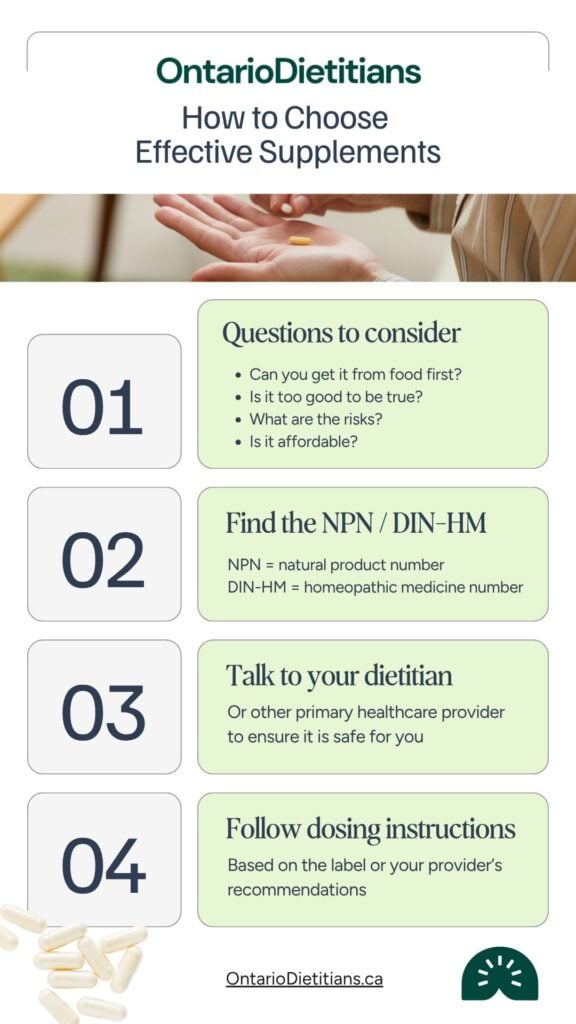
What are the risks associated with the supplement?
Natural does not always mean safe.
Make sure to always look into any potential risks and side effects of a supplement. Many supplements may interact with medications or other supplements – so it is important to discuss with your health provider before starting anything new. NHPs can also cause harmful side effects when used for purposes other than their approved use or if exceeding dosing instructions.
Look for a NPN / DIN-HM number
When choosing a specific supplement, look for either an NPN or DIN-HM number to ensure it is licensed and approved for sale in Canada. You can look up a supplement’s name or NPN/DIN-HM on the Licensed Natural Health Products Database (LNHPD).
If your supplement is not coming from Canada (or you are based outside of the country), look for third party certifications from trusted, independent third parties. This may include USP (Quality and Purity), NSF (Quality and Purity), and NSF: Certified Sport (Quality, Purity, and Sport).
Talk to Your Health Care Provider (HCP)
It’s important to talk to either your family doctor and/or dietitian before starting to take a new supplement. They can help you decide if this supplement will be safe and effective for you to take.
People with complex health conditions or those taking multiple medications should speak to their primary physician or pharmacist before starting new supplements.
HCPs such as doctors, nurse practitioners and pharmacists can help identify potential side effects, drug interactions, or other safety concerns that might be applicable for you. For example, people taking warfarin or other anticoagulant medications may be advised to avoid vitamin K supplements, as excessive vitamin K intake can reduce the medication’s effectiveness.
Follow the Recommended Dose
Once you have the supplement, make sure you only take it as instructed, whether that is following the instructions on the label or taken as recommended by your HCP. Avoid exceeding the recommended dose to reduce risk of side effects. On the other hand, taking a dose below the recommended amount may not provide the intended effect or benefit.
Is it affordable?
Finally, taking a supplement regularly should be affordable for you long-term (or as long as recommended). Many influencers and companies online often try to sell luxury-priced products with no good evidence to support their claims.
Summary: Individualized Considerations
In summary, there are so many factors we need to assess and consider before taking a supplement. Everyone’s nutrition status, needs and goals are very different and dietitians can help you choose the supplement(s) you need. We hope this blog helps you make an informed decision before starting a new supplement!


Add a comment